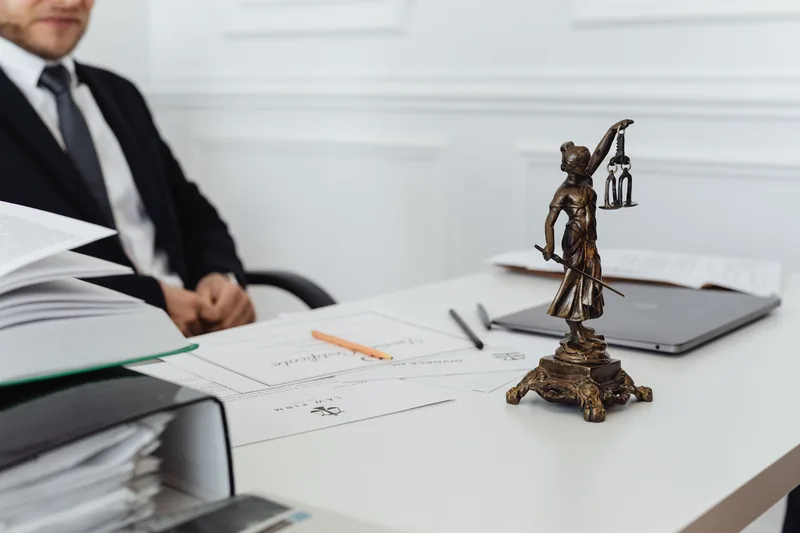
Legal professionals
Investigative support for law firms
A chronology to rebuild, a doubtful document, a witness to locate, a counterparty whose statements do not add up: preparing a case sometimes requires checks a firm cannot carry out alone. RAINBOWNET provides lawyers with documented factual support, within the limits of applicable law and under their instruction.
What this support covers
We work on documentary research, verification of exhibits, reconstruction of chronologies and lawful identification of witnesses. We locate individuals whose testimony is under consideration, retrieve public decisions and filings, and rebuild chains of fact from scattered material, including documents drafted in more than one language.
This work does not replace your legal analysis; it informs it. We do not characterise facts in law and we do not draft submissions. Our role is to supply verifiable, dated and sourced material that can be used in a file or at a hearing.
How the work is organised
The firm sends us written instructions: subject of the file, points to be verified, deadlines that matter, available exhibits. We flag at once anything that cannot lawfully be obtained, so that no time is spent on research that will lead nowhere or on requests that will be refused. That applies equally to material held by a third party.
We work under your instruction, in direct contact with the designated fee earner. Exchanges stay limited to authorised people, documents are held on a restricted basis, and the report is addressed to the firm first, with no circulation to your client unless you ask for it.
What the firm receives
A factual report, a dated chronology, a source register and the exhibits in annex. Each finding states its origin and degree of certainty; points not established are listed explicitly rather than filled in with an assumption, so that the file remains readable at a hearing and can be tested against the opposing account.
We remain available to clarify a point, check a late element or prepare for a hearing. If further verification becomes necessary during the case, we assess feasibility and cost before undertaking it, so that nothing is set in motion without your agreement. You are told what is possible, what is not, and why.
Limits and professional conduct
We obtain no material by unlawful means and put no pressure on third parties. A witness is identified through lawful channels; any contact, where useful, is announced and documented, and never suggests what a statement should contain, nor offers any inducement of any kind, financial or otherwise.
We decline mandates aimed at circumventing a procedure, intimidating a party or obtaining information covered by a duty of secrecy. These limits are set out at the instruction stage: they protect the credibility of the finding and of the firm producing it, including in court.
Process
How we handle this type of mandate
Instructions from the firm
You send us the subject of the file, the points to verify and the exhibits available. We reply with a note setting out what is feasible, within which timeframe and at what cost, and what is not.
Scoping note
The perimeter, the checks retained and the format of the deliverable are agreed in writing. This step avoids unnecessary research and ensures the report matches the procedural use intended.
Research and verification
Registers, open sources, documents provided, lawful observation: each element is cross-checked and tied to its source. Questionable material is flagged as such, without a hasty conclusion on authenticity.
Deliverable and availability
Report, chronology, source register and annexes are sent within the agreed deadline. We remain reachable to clarify a point before a hearing or complete a last-minute check.
Frequently asked questions
Frequently asked questions
A question specific to your situation? The confidential form lets us answer precisely.
Do you deal with the firm's client directly?
No, unless you expressly ask us to. Our contact is the firm, which sets the instruction and receives the deliverables. That arrangement preserves privilege and prevents any uncontrolled circulation of the findings.
Can you interview a witness?
We can identify and locate one through lawful means. An interview is conducted only where useful, announced as such and documented, without suggesting what a statement should contain. The decision to hear that witness in proceedings remains the firm's.
Are your reports admissible in court?
A private report has no automatic evidential value: its weight depends on the findings it contains, their sources and cross-examination. We produce verifiable, dated material; its procedural use is a matter for your assessment.
How long does a documentary check take?
A targeted search of public registers usually takes a few days. Rebuilding a chronology or locating a witness takes one to three weeks. Deadlines are confirmed in writing once the exhibits have been reviewed.
How is confidentiality ensured?
The file is accessible only to those assigned to the instruction. Exchanges go through an agreed channel, documents are held on a restricted basis, and deliverables are sent only to the contact designated by the firm.
Related services
Individuals
Private investigations in Geneva for individuals: factual verification, lawful tracing and documentary support, handled with discretion and within the law.
ReadBusinesses
Corporate investigations in Geneva: due diligence, pre-contractual checks, conflict-of-interest enquiries and documentary research, lawfully conducted.
ReadInternational
Cross-border investigation coordination from Geneva: multi-jurisdiction verification, international due diligence and lawful documentary research.
ReadNext step
Set out your situation in complete confidence.
A first conversation establishes feasibility, the legal framework and the right method.